

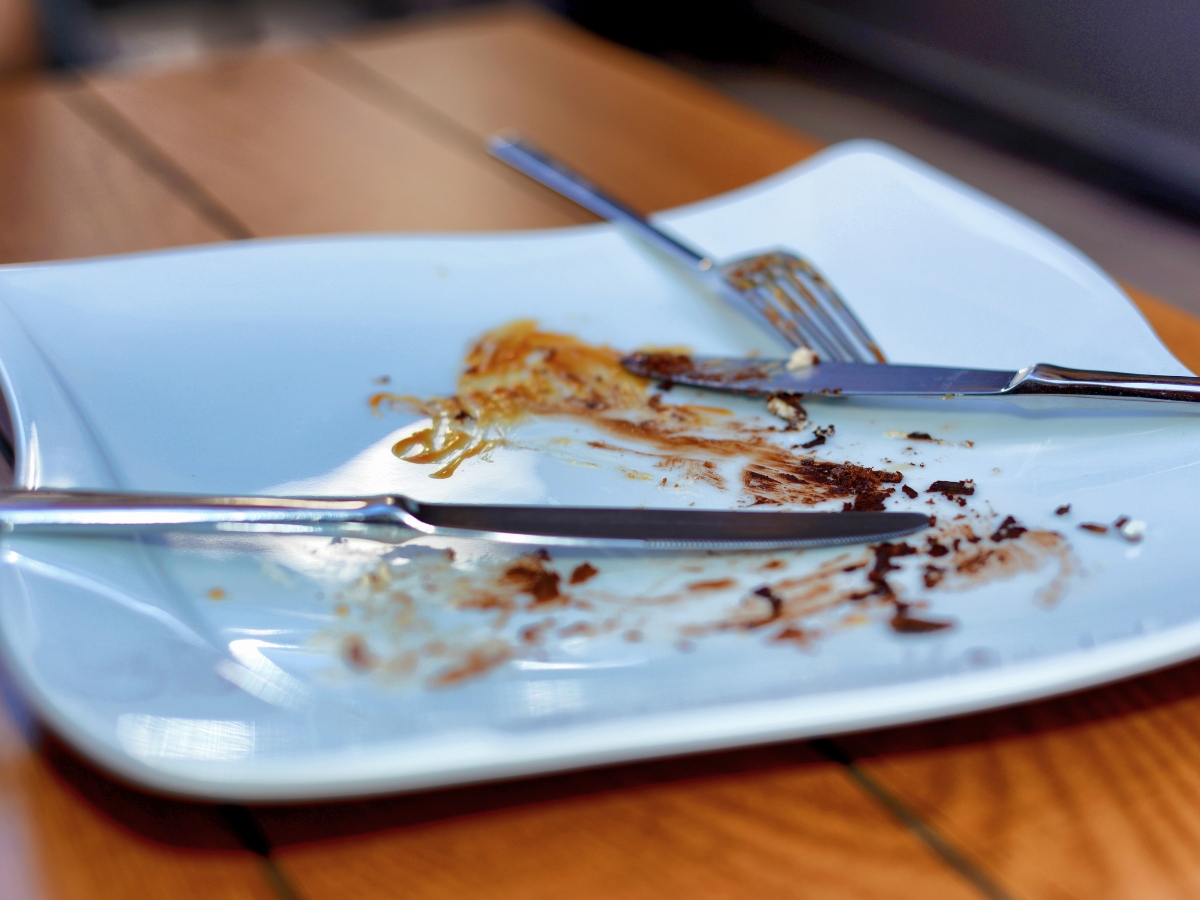
Do you know this feeling? You’re sitting at the table your plate is almost empty and you’re already full. Yet you keep eating because throwing food away is simply not an option. It would be such a waste wouldn’t it? So you eat the very last bite even though your body has been telling you for quite some time that it has had enough. And if you’re honest you’ve probably never known it any other way.
As long as you can remember you’ve always finished everything on your plate.
Most people believe they are doing the right thing in this moment. In reality they are following a rule they learned at some point in life: a meal is only finished once the plate is empty.
That is exactly where the problem begins. Many people do not continue eating because their body still needs food but because they have learned that an empty plate is more important than their own feeling of fullness. This behavior is often referred to as Clean Plate Syndrome. Although it is not an official psychological diagnosis the term describes a very common phenomenon: the habit of finishing everything on your plate regardless of whether you are still hungry.
The consequences often go unnoticed. If you repeatedly eat beyond your natural fullness over many years you gradually lose trust in your body’s signals. Eventually your body no longer decides when a meal is over. Your plate does. That is why so many people find it incredibly difficult to leave the last bite behind.
What Is Clean Plate Syndrome?
The term Clean Plate Syndrome comes from the English speaking world and describes the habit of finishing everything on your plate regardless of your hunger or fullness.
The reasons behind it can vary greatly. Some people simply do not want to waste food. Others feel they would disappoint the person who cooked for them or experience guilt whenever food is left behind. Others grew up believing that an empty plate is a sign of good manners gratitude or appreciation. While the behavior may look similar from the outside the underlying motivations can be very different.
For some people finishing everything on the plate serves a function similar to emotional eating. It is no longer primarily about satisfying hunger but about regulating uncomfortable emotions. As long as there is still food on the plate they feel restless or as though the meal is not truly finished. Only the final bite creates a sense of relief completion or closure. In these moments eating is mainly used to regulate an unpleasant feeling rather than physical hunger.
This is exactly why Clean Plate Syndrome cannot simply be explained by a lack of discipline or willpower. Different psychological mechanisms may be involved. In the following sections we will take a closer look at how childhood family influences guilt habits and emotional processes shape this behavior.
“If You Finish Your Plate the Sun Will Shine Tomorrow” How Childhood Shapes Our Eating Habits
Our relationship with food begins long before we are able to decide for ourselves what and how much we want to eat. During our earliest years we learn countless rules habits and beliefs about food. Many of them stay with us well into adulthood.
Perhaps you also heard phrases like “If you finish your plate the sun will shine tomorrow.” or “Think about all the children in Africa who have nothing to eat.”
Most parents do not say these things to pressure their children. They want to teach gratitude encourage appreciation for food and prevent waste. Their intentions are usually loving and well meaning.
For a child however the intention matters less than the message that is received. The child learns that finishing everything on the plate is something good and may even lead to praise or harmony. At the same time leaving food behind may be associated with disappointment guilt or conflict. Since children are not yet able to question these messages critically they often become deeply rooted unconscious beliefs.
Over time an internal rule develops: a meal is only truly finished once the plate is empty.
Many people carry this rule into adulthood. Even though they are fully capable of deciding when they are full they continue following what they learned as children often without even realizing it.
Why Our Grandparents Are Still Sitting at the Dinner Table
Many of the messages we heard as children did not appear by accident. They were passed down through generations and originally served an important purpose. Our grandparents and great grandparents in particular grew up during times when food was scarce. War the post war years and economic hardship shaped everyday life. Food was precious and wasting it simply was not an option for many families.
Anyone who has experienced what it feels like not to have enough to eat often develops a deep respect for food. Leaving food on the plate could genuinely be seen as waste. This attitude was then passed on to the next generation not because parents wanted to harm their children but because they wanted to teach values such as appreciation and responsibility.
The problem is that our living conditions have changed dramatically. At least in many parts of the world most people now have access to enough food. Yet the beliefs that developed during times of scarcity still exist in many families even though they are not always helpful today.
Appreciating food today does not mean forcing your body to eat beyond fullness.
Instead it means shopping mindfully preparing realistic portions saving leftovers or finding creative ways to use them later. Food is not appreciated because we eat it against our body’s signals. Appreciation begins long before the last bite.
Why Your Brain Trusts Your Plate More Than Your Body
Our body has an incredibly precise system that tells us when we are hungry and when we are full.
In psychology and neuroscience this ability is called interoception which refers to our capacity to notice what is happening inside our body.
It allows us to recognize signals such as hunger fullness thirst and even our heartbeat and respond appropriately.
This ability however is not fixed. The more often we end meals according to external rules the less attention we pay to our body’s signals. If we repeatedly continue eating despite already being full our brain gradually learns that fullness is not the deciding factor. Instead it starts relying on other cues such as an empty plate a certain portion size or the time of day.
Psychologists refer to these as external cues that influence eating behavior. The plate itself becomes a point of reference. As long as there is still food on it the brain unconsciously signals that the meal is not over. Only once the plate is empty does it create the feeling that eating can stop even if the body no longer needs another bite.
The good news is that this pattern can change. The more often you pause during a meal and ask yourself whether you are still hungry or simply trying to finish your plate the more you relearn to trust your body’s signals. Over time your feeling of fullness can once again become what it was always meant to be: the most important guide for deciding when a meal is over.
What Science Says About Clean Plate Syndrome
The fact that we often eat more than our body actually needs is not a new discovery. Psychologists and nutrition researchers have been studying the factors that influence eating behavior for decades. Again and again the evidence shows that our decisions are influenced far less by hunger and fullness than we tend to believe. External factors such as portion size plate size and the visible amount of food play a much larger role than most people realize.
One of the best known examples is the Bottomless Soup Bowl Experiment conducted by nutrition researcher Brian Wansink. Participants were given bowls of soup that secretly refilled themselves. Those with the self refilling bowls consumed significantly more soup than the comparison group yet they did not feel fuller and often failed to notice how much they had actually eaten. The study demonstrated just how strongly we rely on external cues such as whether the bowl or plate is empty.
Today however Wansink’s research is viewed critically. Several of his studies have been retracted because of methodological problems and parts of his work are no longer considered scientifically reliable. This does not mean that the overall conclusion is wrong. Numerous independent studies have shown that external cues such as portion size plate size and the visible amount of food have a substantial impact on how much people eat. This phenomenon is known as the portion size effect. The larger the portion people are offered the more they tend to eat on average often without consciously realizing it.
Clean Plate Syndrome can be understood in the same way. If our brain has learned that an empty plate signals the end of a meal hunger and fullness cues gradually fade into the background. This does not mean our body loses its ability to recognize fullness. It simply means we begin paying more attention to external cues than to our body’s actual needs.
When Guilt Is Stronger Than Fullness
For many people throwing food away does not simply feel uncomfortable. It creates genuine guilt. Even though they are already full they keep eating because wasting food feels like wastefulness ingratitude or even a moral failure. Their body’s feeling of fullness gradually becomes less important.
In recent years the term food waste anxiety has become increasingly common. It describes the worry or guilt people experience about wasting food. Those who struggle with strong guilt often do not see throwing food away as a practical decision but as a moral conflict.
These feelings rarely appear out of nowhere. They are usually shaped by childhood upbringing cultural values and personal experiences. Anyone who has learned that food is especially precious or that wasting food is fundamentally wrong often develops a strong sense of responsibility. While this sense of responsibility can be something positive it becomes problematic when it consistently overrides the body’s needs.
Ultimately two important values are competing with one another: appreciating food and respecting your own body. Both matter. The challenge is finding a way to honor both. Wasting food is not desirable but regularly forcing your body to eat beyond natural fullness is not an expression of appreciation either.
It can therefore be helpful to question your guilt more closely. Is it really caused by wasting food? Or does it arise because you once learned that finishing everything on your plate is the right thing to do even when your body has already had enough?
Your Body Is Not a Trash Can
Many people believe they appreciate food by eating everything on their plate. But is that really true? Is food truly appreciated when we eat it even though our body has already had enough? Once we are full food has already fulfilled its original purpose.
The food may disappear from the plate but it has not really been saved.
The real shift in perspective is this: once your body is already full it makes no difference whether the remaining bites end up in the trash or in your stomach. In both cases they are no longer needed. The only difference is that your body now has to process something it never actually wanted anymore.
This does not mean food should be thrown away carelessly. Quite the opposite. Food deserves respect and appreciation. But your body deserves the same respect. It is not a place where leftovers should be disposed of simply because throwing them away feels wasteful.
Perhaps it helps to ask yourself a different question in the future: What is the more respectful choice in this moment to eat the last bite even though I am already full or to listen to my body’s signals?
Appreciating food and appreciating your body are not opposites. Both begin with conscious awareness.
Appreciating Food Starts Long Before the Last Bite
If you truly appreciate food that appreciation does not begin once the meal is already on your plate. It begins much earlier with shopping planning and preparing only the amount you actually need.
The most sustainable meal is not the one you force yourself to finish but the one that leaves as little waste as possible.
Of course this is not always possible. Sometimes we cook too much our appetite changes or we become full sooner than expected. That is completely normal. Rather than turning your body into a place for leftover disposal it is worth looking for other solutions. Many meals can easily be stored frozen or enjoyed the next day. It also helps to serve yourself smaller portions first and simply take more if you are still hungry.
Sustainability and caring for your body are not opposites. On the contrary people who shop mindfully prepare realistic portions and use leftovers creatively usually contribute far more to reducing food waste than those who regularly eat beyond fullness.
How to Break Free from Clean Plate Syndrome
Like any learned behavior Clean Plate Syndrome can be changed. The first step is simply becoming aware of it. During your next meal ask yourself: Am I continuing to eat because I am still hungry or because my plate is not empty yet?
It can also help to start with smaller portions and consciously give yourself permission to have more if you are still hungry. This shifts the decision away from choosing between finishing everything or wasting food. Instead the choice becomes whether you genuinely need more food or whether you are already satisfied.
If leaving food on your plate feels especially difficult try a simple exercise. Leave behind just one spoonful or one small bite and notice what happens inside you. What thoughts appear? Do you feel restless guilty or driven to finish the plate anyway? Rather than immediately getting rid of those feelings by eating the last bite simply observe them. Over time your brain will learn that nothing bad happens when your plate is not completely empty.
Pay attention to the thoughts that arise whenever food is left behind. Do you feel as though you are doing something wrong? Or is it simply difficult to end a meal while food is still on the plate? Becoming aware of these thoughts is often the first step toward changing old habits.
Change does not mean suddenly throwing food away. It means learning to trust your body again. Every time you finish a meal because you feel comfortably full rather than because your plate is empty you strengthen that trust a little more.
Conclusion: Trust Your Body More Than Your Plate
Finishing everything on your plate may seem like a small habit. In reality it is often the result of childhood experiences family influences cultural values and psychological mechanisms. What feels completely normal to many people is often the outcome of beliefs they learned early in life.
Respecting food is important. Respecting your body is equally important. True appreciation is not shown by continuing to eat against your body’s signals but by treating food mindfully while also listening to your body’s needs.
Perhaps there is one thought you will take away from this article:
A meal is not over when the plate is empty. It is over when your body tells you it has had enough.
That is where a more relaxed healthier and more respectful relationship with food truly begins.
SHARE THIS POST